
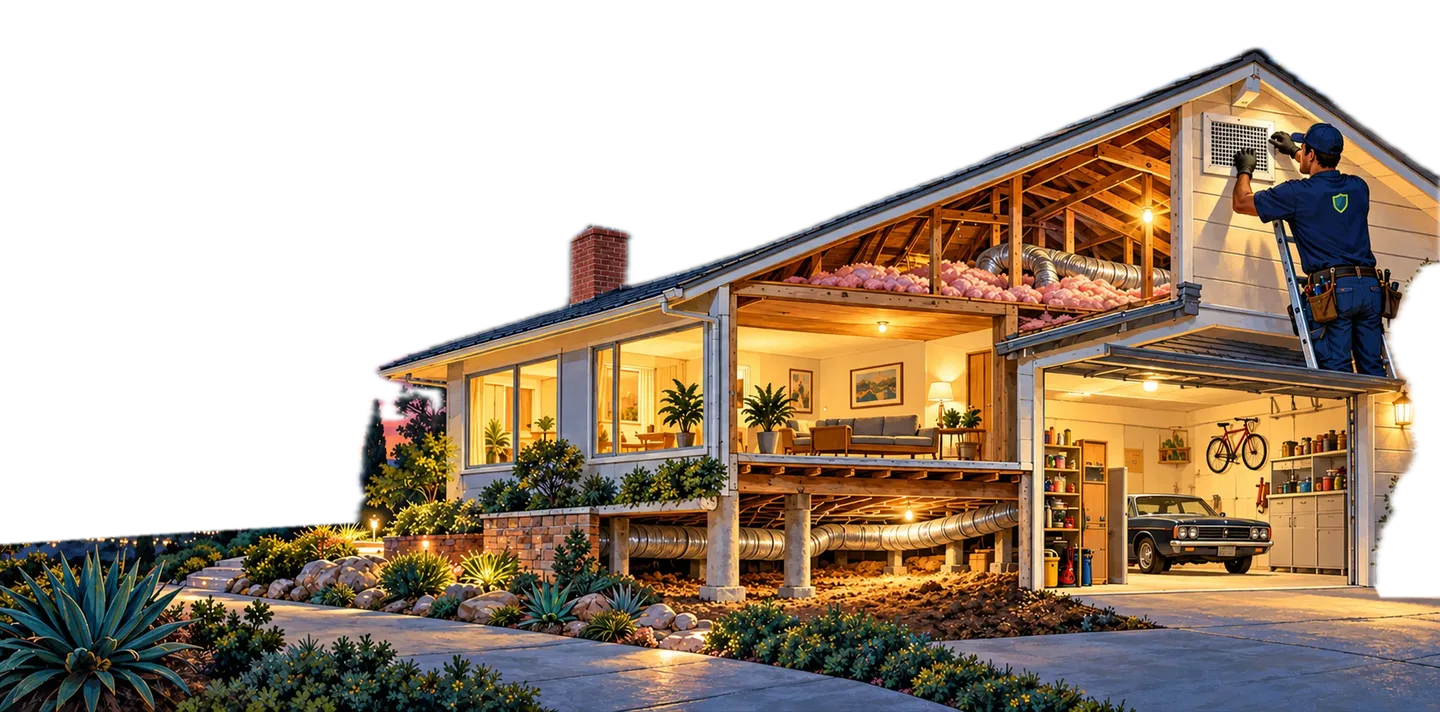
What is the difference between cellulose and fiberglass insulation?
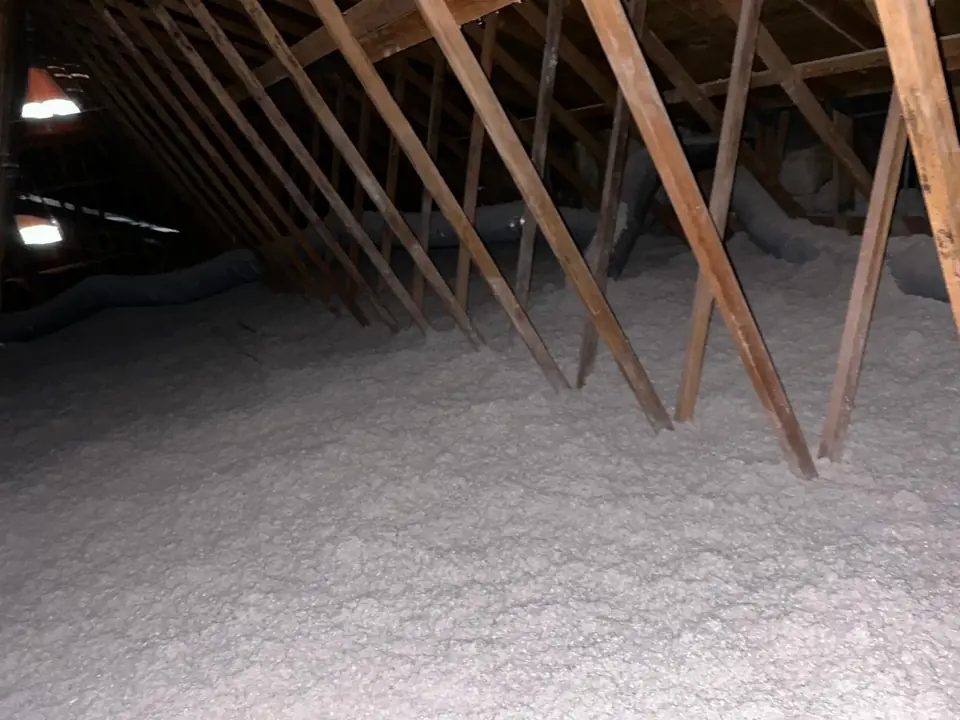
Cellulose is made mostly from recycled paper fibers and is blown in loose. Fiberglass is made from fine glass fibers and most often comes as batts, pre-cut blankets that fit between the framing.
Both slow down heat moving through your ceiling, floor or walls. The difference is mostly in how they go in and which spaces they suit. Cellulose is treated to resist fire. Fiberglass batts come in set thicknesses, so you pick the batt that matches the R-value you want.
Does insulation matter in a mild climate like the Bay Area?
Yes. Mild on average still means hot summer afternoons inland and cool, damp nights near the bay, and an under-insulated attic lets both straight into your rooms.
Insulation is mainly about comfort: upstairs rooms that don’t bake in the afternoon, floors that aren’t cold in winter, and a heater and AC that don’t have to work as hard to keep up. Many older Bay Area homes have less insulation than is recommended today, and what is there has often been flattened, soiled or pushed aside over the years.
Which type do you install?
We install any type of insulation you want. Our most popular is blown-in cellulose.
We install brands like Owens Corning PINK fiberglass batts, Knauf EcoBatt, ROCKWOOL Comfortbatt (stone wool), and CleanFiber cellulose (our main one) and Mountain Fiber cellulose. At the free inspection we recommend the type that fits your space, and the written quote lists it clearly. See cellulose insulation and batt insulation.
Which is better for a Bay Area attic?
Both work well when they are installed to the right depth. Blown-in cellulose is often the easier fit for an open attic floor with lots of wires, pipes, ducts and odd corners, because it fills around everything.
Batts are a good fit where the joist spaces are clear and even. In an attic with a low roof pitch or tight edges, blown cellulose can reach spots that are hard to fit batts into. In a roomy attic with clean framing, batts go in neatly. That is a call we make in the attic, not from a chart.
How much insulation do I need?
R-value measures how well insulation resists heat; higher is better. Our usual targets are R-38 in the attic, R-19 under the floor in a crawl space, and R-13 to R-15 in walls.
That lines up with ENERGY STAR, which recommends R-38 for an attic that already has 3 to 4 inches of insulation and R-49 for an uninsulated attic, plus R-19 for floors, in Zone 3 on its map. Most of the Bay Area falls in Zone 3.
These are starting points, not rules. We install any R-value for any insulation type, based on what you ask for and what we recommend after the inspection. Attics get the thicker layers, crawl spaces thinner ones.
Which insulation works best under the floor in a crawl space?
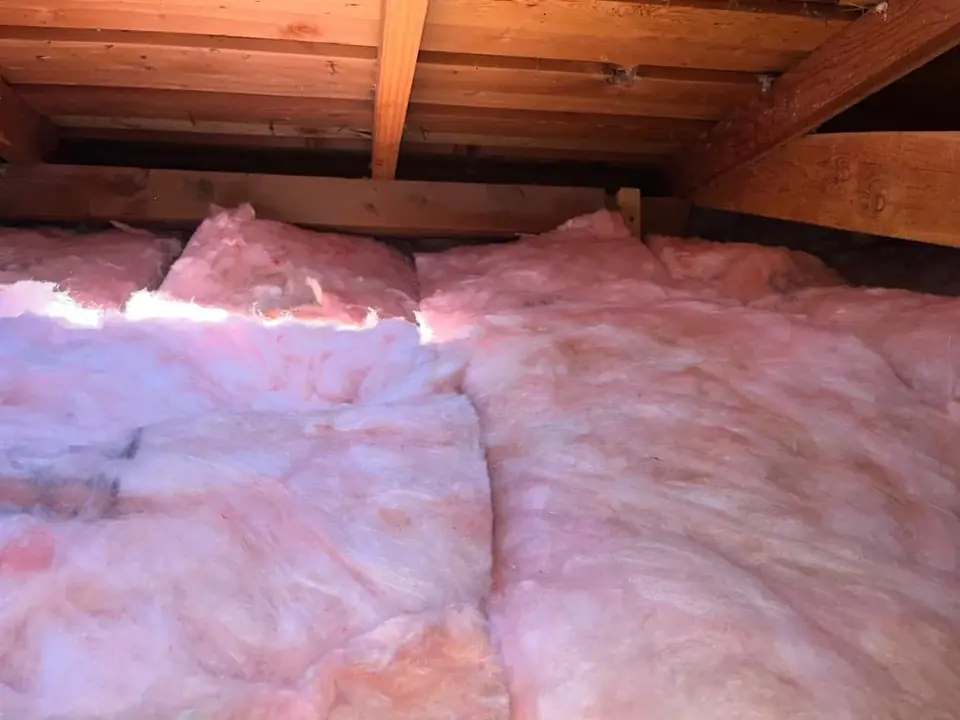
Batts. They fit between the floor joists from below and are held up with metal wire supports, so they stay in place against the floor.
Blown-in cellulose is made for open attic floors, so under the house we use batts. If the old batts have fallen or been soiled by animals, they come out first. Our post on crawl space smells explains why fallen batts often go with a musty odor.
Does cellulose settle over time?
Loose-fill insulation settles a little after it is blown in. A good installer blows it deep enough to reach the target R-value after it settles.
Batts keep their shape as long as they stay dry and are not crushed. Either way, what matters most is that the layer is even, with no bare spots, gaps or flattened paths.
Is cellulose or fiberglass better against rodents?
Neither one keeps rodents out. Rats and mice tunnel and nest in any kind of insulation.
What keeps them out is sealing the ways in, with galvanized steel mesh, putty and concrete. That is why, when rodents have been in the attic, we seal the openings and clean up before new insulation goes in. See rodent proofing and attic cleaning.
What about insulating the garage?
Garage insulation goes on the inside: batts in the open wall framing, and in the ceiling when there is a room above the garage. Walls usually get R-13 to R-15.
A garage with a bedroom or bonus room over it is a common case in Bay Area homes. That room often runs hotter in summer and colder in winter than the rest of the house, and insulating the garage ceiling below it can help. Batts are the usual choice here because the framing is open and easy to reach. If rodents have been living in the garage, the gaps get sealed and the area cleaned before anything new goes in.
Should the old insulation be removed first?
If it is soiled with droppings, wet, moldy or badly flattened, yes. If it is clean and dry, it can sometimes stay. We check it at the inspection and photograph what we find.
What we see on real jobs
In attics around San Jose, Cupertino and Mountain View, the common problems are the same:
- Old insulation that is thin, patchy or pushed aside by past work.
- Paths and tunnels left by rodents, with droppings along them.
- Bare spots near the eaves and around the attic hatch.
- Fallen or torn batts under the floor in crawl spaces.
Insulation is a one-day job. Book a free inspection, and you will have a written quote the same day.