

What is a radiant barrier?
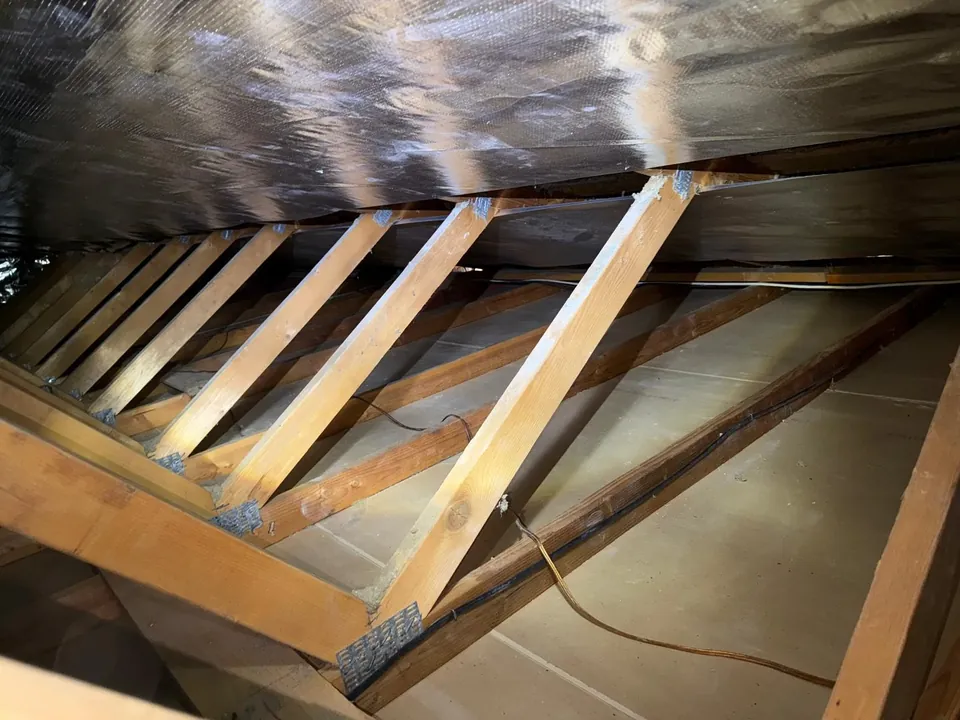
A radiant barrier is a sheet of reflective foil installed under the roof, on the underside of the rafters. It reflects the heat that a hot roof sends down into the attic.
It looks like a silver lining across the roof slope. It is not insulation in the usual sense, and it doesn’t replace the insulation on your attic floor. It does a different job.
How does a radiant barrier work?
On a sunny day the roof gets hot and radiates that heat down onto everything in the attic: the insulation, the ducts and the ceiling below. A radiant barrier reflects much of that heat back up before it reaches them.
Regular insulation works differently. It slows heat as it passes through the material. A radiant barrier only reflects radiant heat, and to work it needs an air space on its shiny side. That is why the two work best together: the barrier cuts the heat coming off the roof, and the insulation slows whatever heat still gets through the ceiling.
Is a radiant barrier worth it in California?
It depends on how hot your attic gets. A radiant barrier helps most in hot, sunny areas, and especially when your heating and cooling ducts run through the attic.
The Bay Area has big differences from town to town. Inland areas like much of San Jose, Livermore, Pleasanton, Morgan Hill and Gilroy see hotter summer afternoons than towns close to the bay or the coast, and their attics heat up more. Homes near the foothills, like many in Los Gatos, can get strong afternoon sun on the roof too. In cooler spots, adding insulation is usually the better first step.
We won’t promise a number on your energy bill. What we can do is look at your attic, your roof and where your ducts run, and tell you honestly whether a radiant barrier makes sense for your home.
Does a radiant barrier replace insulation?
No. It works alongside insulation, not instead of it. If the insulation on your attic floor is thin or soiled, that usually comes first.
Our usual attic target is R-38. We install any type of insulation you want; our most popular is cellulose, and we also fit batts. For more on choosing, see cellulose vs fiberglass insulation. We install insulation brands like Owens Corning PINK fiberglass batts, Knauf EcoBatt, ROCKWOOL Comfortbatt (stone wool), and CleanFiber cellulose (our main one) and Mountain Fiber cellulose.
Does a radiant barrier help the AC ducts in my attic?
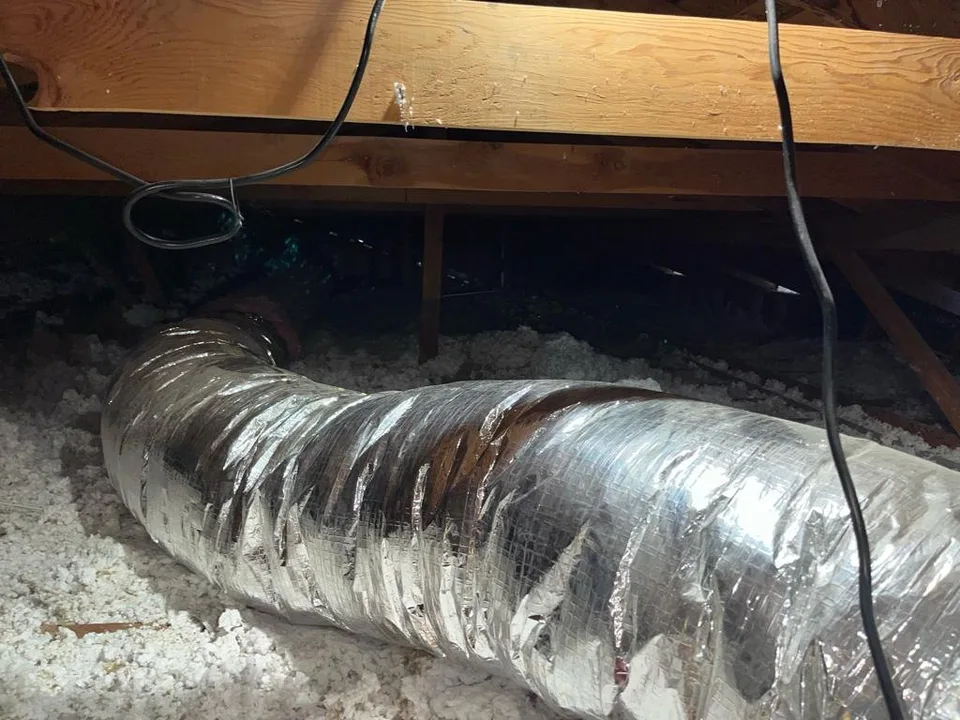
Yes, that is one of the main reasons people add one. Ducts in a hot attic soak up heat from the roof, so the cool air inside them warms up before it reaches your rooms.
A radiant barrier cuts the heat shining down on those ducts. If the ducts themselves are old, torn or crushed, it makes sense to replace them at the same time with new flexible insulated ducts.
Where is a radiant barrier installed?
Under the roof, stapled to the underside of the rafters, with the foil facing the open attic. It should not be laid flat on top of the floor insulation.
Foil lying on the attic floor collects dust, and dust makes it reflect less. It can also trap moisture in the insulation underneath. Hung from the rafters, the foil stays cleaner and keeps the air space it needs to work.
How do I know if my attic gets too hot?
The easiest clues are in the rooms under the attic. If the top floor or the rooms under the roof stay hot long into the evening, and the AC seems to run and run on summer afternoons, the attic is likely a big part of it.
You can also feel it. On a sunny afternoon, open the attic hatch for a moment: a blast of heat tells you how hot the roof is getting. Ceilings that feel warm to the touch are another sign. None of these prove a radiant barrier is the answer, since thin insulation and old ducts cause the same symptoms. That is why we look at all three together at the inspection.
What happens on the installation day?
Radiant barrier installation is a one-day job, done from inside the attic. Please be home on the job day and clear breakable items, like pictures and vases, from the path to the attic.
The crew covers the path from the front door to the work areas with drop cloths or plastic sheeting, and takes before and after photos, which they send to you.
Does a radiant barrier help in winter?
A little at most. Its main job is to cut summer heat coming off the roof. For winter comfort, the insulation on your attic floor does most of the work.
What we see on real jobs
Radiant barriers usually come up in attics that get very hot in summer, and they are rarely the only thing the attic needs. Common findings:
- Ducts running across a hot attic, some of them old or damaged.
- Thin or uneven insulation on the attic floor.
- Signs of rodents that need sealing and cleanup first.
That is why many homeowners do the radiant barrier together with insulation or new ducts. Customers who book two or more services get 10% off (one discount per job). See radiant barrier for how we install it. Book a free inspection, and we will tell you whether it is worth it for your attic, with a written quote the same day.